

Every year, the first cold spell arrives before most households are ready. In Lahore, Islamabad, and Peshawar, night temperatures begin dropping as winter approaches, while Quetta, Balochistan’s highlands, and the northern regions can experience much colder conditions, with temperatures falling below freezing. Karachi also experiences cooler winter nights, although temperatures generally remain milder than in northern Pakistan.
Many Pakistani homes have uninsulated brick-and-mortar walls, single-glazed windows, and reinforced concrete (RCC) roofs that can allow heat to escape quickly. This guide covers the key aspects of preparing your home for winter, from understanding heat loss to choosing suitable winter heating solutions.
Why Pakistani Homes Lose Heat So Quickly
Many Pakistani homes have uninsulated brick walls, concrete roofs, and single-glazed windows, allowing heat to escape during winter. A typical 9-inch uninsulated brick wall may have a U-value of approximately 1.5–2.0 W/m²K, while single-pane glass can reach around 5–6 W/m²K. Actual values vary depending on materials and construction.
Heat loss occurs through three main mechanisms:
- Conduction: Heat transfers through walls, roofs, floors, and windows.
- Air infiltration: Cold air enters through gaps around doors, windows, and other openings.
- Radiation: Heat transfers between surfaces at different temperatures, making rooms feel colder near poorly insulated walls and windows.
Identifying these weak points helps improve insulation and heating efficiency, keeping indoor spaces warmer during winter.
6 Essential Steps to Prepare Your Home for Winter in Pakistan
These six practical winter preparation tips can help keep your home warm, safe, and energy-efficient throughout Pakistan’s winter season.
1. Inspect Your Home’s Insulation and Building Envelope
The building envelope includes walls, roofs, windows, and doors that separate indoor spaces from outdoor conditions. Poor insulation and air leaks allow heat to escape, making homes colder and increasing heating requirements.
Inspect your roof, external walls, window frames, and door gaps for cracks, damaged seals, or drafts. Proper insulation and weatherstripping can improve heat retention and indoor comfort.
2. Seal Windows and Doors Against Cold Air
Gaps around windows and doors allow cold air to enter and warm air to escape. Replace damaged weatherstripping, seal stationary frame gaps with suitable caulk, and use thick curtains to reduce heat loss through windows.
Maintain required ventilation, especially when using fuel-burning heating appliances.
3. Choose a Suitable Heating System for Your Home
Choosing the right home heating solutions depends on room size, insulation, energy costs, and available power sources. An electric heater can provide convenient, targeted warmth during Pakistan’s winter season. You can choose a Belvin electric heater that suits your home, bedroom, or office.
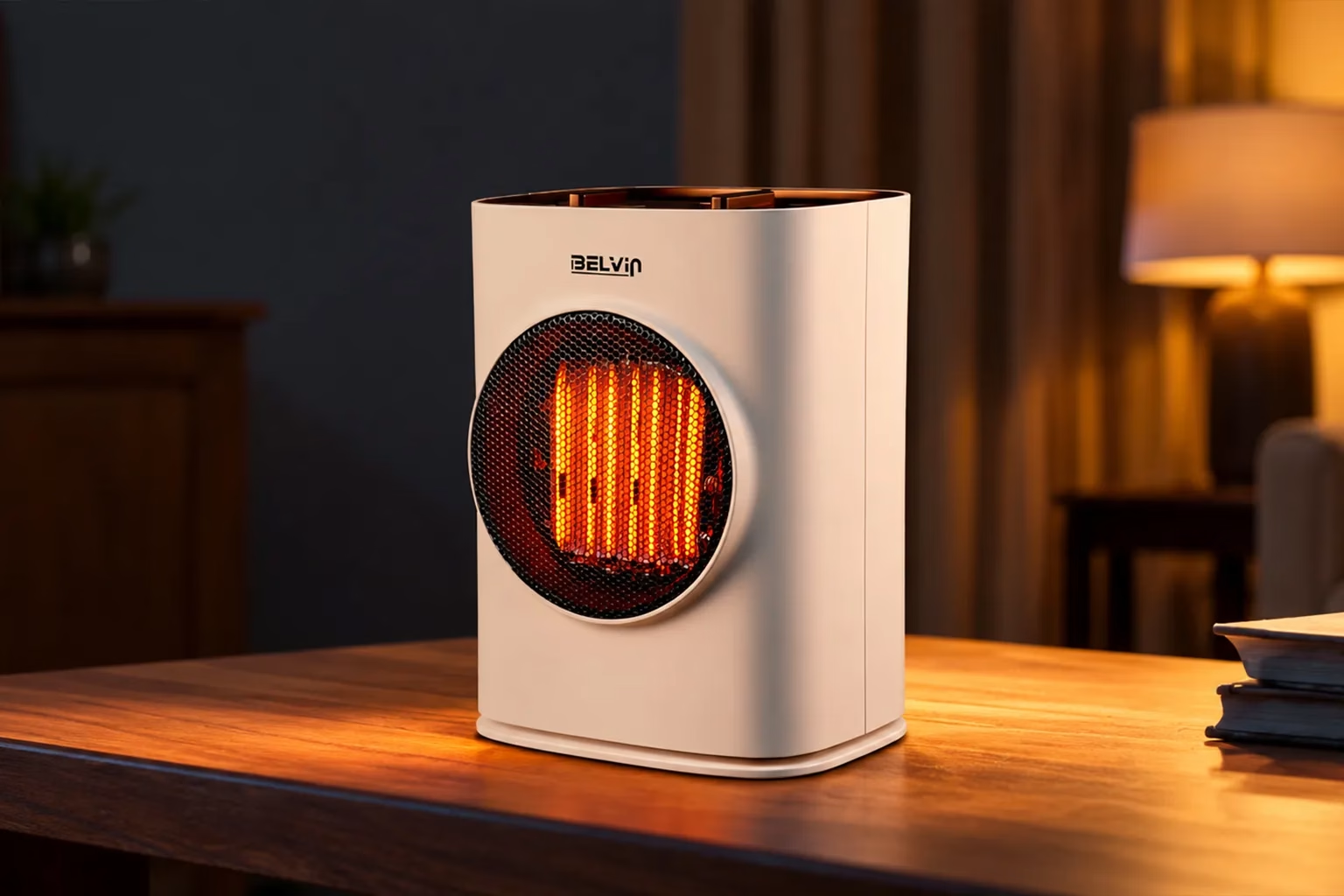
Belvin room heaters offer features such as energy-saving technology in selected models, quiet operation, durable design, and inverter compatibility for compatible power systems. Selected models can help reduce electricity consumption, with potential savings of up to Rs. 6,000 per year depending on usage patterns. Belvin heaters also come with a 1+1-year warranty.
4. Prioritize Heating Safety and Indoor Air Quality
Safe operation is essential when using an electric heater for home. Keep the heater away from curtains, bedding, furniture, and other flammable materials. Place it on a stable, level surface and avoid covering it during operation.
Use properly rated electrical sockets, avoid overloading circuits, and never operate a heater with damaged cables. Choose models with overheat protection and tip-over protection where available, and always follow the manufacturer’s safety instructions. Switch off the heater when it is not needed.
5. Control Indoor Humidity and Prevent Condensation
Cold surfaces can cause moisture to condense on windows and walls, potentially leading to mold growth and property damage.
To reduce condensation:
- Use exhaust fans in kitchens and bathrooms.
- Repair leaks and dry wet surfaces promptly.
- Maintain adequate ventilation.
- Address recurring dampness and improve insulation where needed.
Heating helps maintain comfortable indoor temperatures, but effective moisture control also requires ventilation and leak prevention.
Belvin also offers exhaust fans that help remove excess moisture, odors, and stale air from kitchens and bathrooms, improving indoor ventilation. These exhaust fans can help save up to 35% on electricity costs, depending on the model and usage.
6. Improve Thermal Comfort With Simple Interior Changes
Thick curtains, rugs, and suitable bedding can improve comfort during cold weather. Open curtains during sunny hours to benefit from natural warmth and close them after sunset to reduce heat loss through windows.
Keep heaters unobstructed and maintain a comfortable indoor temperature using thermostats or timers where available. Heating occupied rooms as needed can also help reduce unnecessary energy consumption.
Which Belvin Electric Heater Is Right for Your Home?
Compare the following Belvin electric heaters according to your room size, heating requirements, and preferred design.
1. Sun Heater Bracket
The Belvin Sun Heater Bracket provides 300W radiant heating with a space-saving wall-mounted design. Its ceramic and carbon halogen heating elements, 180-degree oscillation, and heat-resistant construction make it a practical option for homes where floor space is limited.
2. Sun Heater Stand
The Belvin Sun Heater Stand offers 300W radiant heating in a portable pedestal design. It features ceramic and carbon halogen heating elements, 180-degree oscillation, and heat-resistant construction, allowing flexible placement around your home.
3. Ceramic Fan Heater
The Belvin Ceramic Fan Heater (Energy Saver) uses a PTC heating element and has a starting power consumption of 700 W. It features warm and cool air functions, an adjustable thermostat, oscillation, and safety features such as tip-over and overheat protection. The model is advertised as covering up to 25 square meters and offering 25% energy savings.
4. Fan Heater
The Belvin Fan Heater provides everyday heating with power consumption starting at 900W. Its compact design includes warm and cool airflow, an adjustable thermostat, tip-over and overheat protection, and wire made with 99.9% copper. With stated coverage of up to 25 square meters, it is an option for homes and workplaces requiring focused heating.
How to compare these heaters
Do not select a heater based on wattage or advertised coverage alone. Consider whether you prefer radiant heat or fan-assisted airflow, how frequently the room is occupied, and which safety features the model provides.
Check the current product page and manual for exact specifications, operating instructions, and warranty terms before purchasing.
How to Estimate the Running Cost of an Electric Heater
Understanding electricity consumption helps you compare heating options before making a purchase.
You can estimate an electric heater’s energy use with this formula:
Energy consumption (kWh) = Power (W) × Operating hours ÷ 1,000
For example, a heater operating at a constant 1,000 W for three hours would consume approximately 3 kWh. To estimate the cost, multiply the energy consumed by your applicable electricity tariff. Your actual bill may also include taxes, adjustments, and other charges.
For heaters with adjustable settings or thermostats, actual consumption may differ from the maximum rated power. Usage duration, room conditions, and temperature settings all affect the result.
Rather than relying on a general annual-savings promise, compare models using your expected daily usage and the same electricity tariff. This gives you a more useful estimate for your household.
Winter Home Essentials: What Should You Prepare?
Before winter arrives, use this checklist to prepare your home and prevent common seasonal problems. These simple tasks can make winter preparation in Pakistan easier.
| Essential item | Why it helps |
| Weatherstripping and suitable sealant | Helps reduce drafts around doors and windows |
| Thick curtains | Can reduce heat transfer through windows |
| Warm blankets and bedding | Improve personal comfort on cold nights |
| Rugs or floor coverings | Make cold floors more comfortable |
| Suitable electric heater | Provides targeted warmth when required |
| Working exhaust fans | Help remove moisture and stale air |
| Appropriate electrical accessories | Support safe operation when correctly rated and used |
| Basic home-maintenance supplies | Help address minor gaps and maintenance issues |
You do not necessarily need to purchase everything on this list. Start with existing drafts, moisture problems, and the rooms you use most often, then prioritise improvements according to your budget.
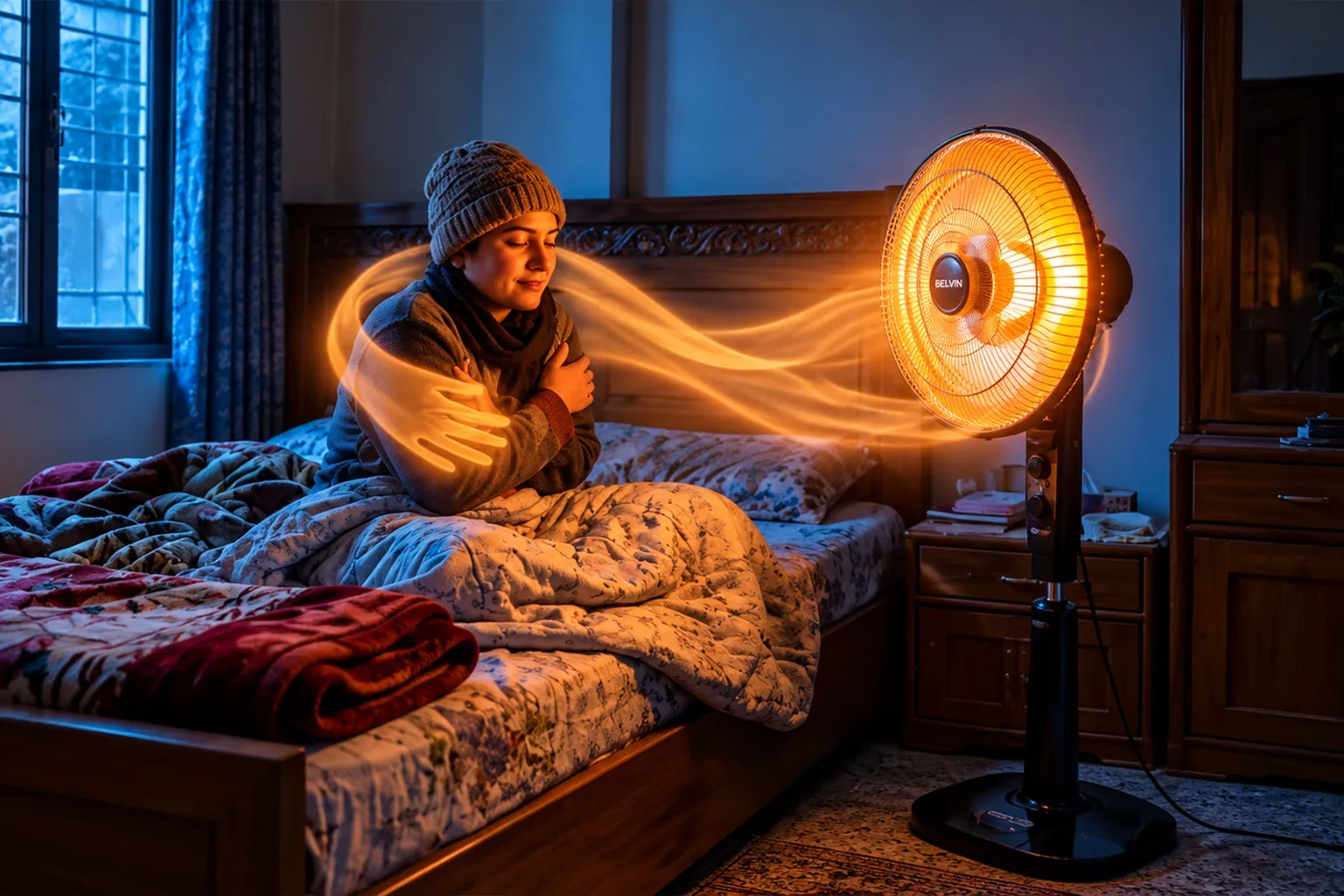
Get Your Home Ready for Winter with Belvin
Prepare for the colder months with the right heating solutions from Belvin. Find your ideal electric heater for home use from Belvin’s product selection to suit your home, comfort needs, and energy requirements. Choose the right products today and make your home more comfortable this winter.
Frequently Asked Questions
How can I prepare my home for winter in Pakistan?
Seal gaps around doors and windows, check insulation, inspect electrical systems, and choose a suitable heating solution.
Which electric heater is suitable for home use?
The right heater depends on your room size, heating requirements, power consumption, and preferred features.
How can I reduce heat loss during winter?
Use weatherstripping, seal drafts, install thick curtains, and improve insulation where needed.
Are Belvin electric heaters suitable for winter?
Belvin offers different electric heater models, including radiant and fan heaters, to suit various household heating needs.
How can I use an electric heater safely?
Keep it away from flammable materials, use a suitable electrical socket, avoid overloading circuits, and follow the manufacturer’s safety instructions.