
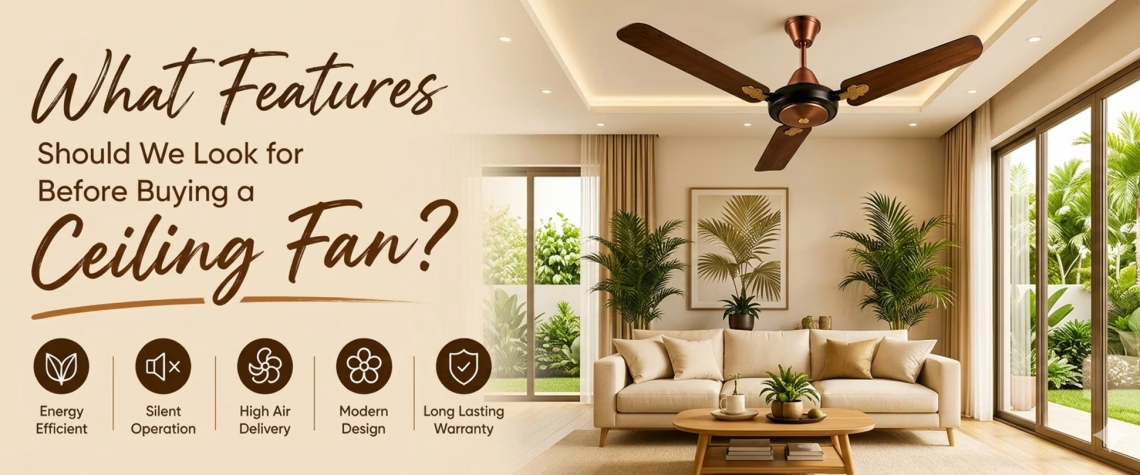
Every summer, homeowners across Pakistan face familiar challenges: rising electricity bills, load shedding, and ceiling fans that struggle to provide consistent airflow during extreme heat. Since ceiling fans often run for 10–14 hours daily in many households, choosing the wrong model can affect energy costs, comfort, and long-term performance.
Today, buying a ceiling fan is no longer just about design or price.
But how do you know which features actually matter and which ones are just marketing claims? Keep reading as we break down the key things you should look for before buying a ceiling fan.
Things to Look for Before Purchasing a Ceiling Fan
Let’s understand what separates an ordinary ceiling or roof fan from a smarter long-term investment.
1. Energy Efficiency Should Be Your First Priority
One important factor many buyers overlook is ceiling fan wattage.
Traditional ceiling fans typically consume between 70 and 120 watts. While that may not sound like much, a fan that runs for many hours daily can increase electricity costs over time.
Modern inverter ceiling fans using BLDC motor technology consume far less power, often operating around 30–35 watts while maintaining strong airflow.
| Fan Type | Typical Power Consumption | Estimated Efficiency |
| Traditional Ceiling Fan | 70–120W | Higher electricity usage |
| Inverter BLDC Ceiling Fan | 30–35W | Lower energy consumption |
Benefits of energy-efficient fans include:
- Lower monthly electricity bills
- Reduced long-term operating cost
- Better performance on UPS systems
- Less energy wastage
2. Check If the Fan Supports UPS and Inverter Systems
In Pakistan, load shedding and power interruptions remain common in many cities.
A ceiling fan that consumes lower power can operate much longer on battery backup compared to conventional models.
Many homeowners now prefer AC DC ceiling fans because they can work efficiently with:
- UPS systems
- Batteries
- Solar setups
- Home inverter systems
This feature becomes especially valuable during the summer, when uninterrupted airflow is most crucial.
Fans designed specifically for backup compatibility may run longer than standard fans because of their lower power consumption.
3. Motor Technology Matters More Than Most People Realize
The motor is the core of every ceiling fan.
The quality of the motor affects:
- Performance
- Electricity consumption
- Noise levels
- Durability
- Lifespan
BLDC (Brushless Direct Current) motors use electronic controls rather than traditional brush-based systems. This allows more precise speed control and typically reduces energy losses during operation.
BLDC motors provide:
- Higher energy efficiency
- Better speed control
- Lower heat generation
- Quieter operation
- Longer life expectancy
A roof fan may look attractive from the outside, but motor quality determines how well it performs over the years of daily use.
4. Consider Air Delivery, Not Just Speed
Many buyers assume that higher RPM (Revolutions Per Minute) automatically means better cooling.
That is not always true.
Cooling performance depends on airflow efficiency and blade design.
Important blade factors include:
- Blade length
- Blade span
- Aerodynamic design
- Balanced construction
Longer and properly engineered blades distribute air more evenly across the room.
A well-designed fan can create stronger airflow while consuming less electricity.
5. Low Noise Operation Improves Comfort
A noisy fan can become frustrating, especially at night.
Many older fans develop vibration sounds or motor noise over time. High-speed operation can make this even worse.
Quiet operation is particularly important in:
- Bedrooms
- Study rooms
- Offices
- Nurseries
Modern ceiling fans with balanced rotors and advanced motor technology operate much more smoothly.
When comparing options, buyers should look for fans designed specifically for low-noise performance rather than focusing only on speed.
6. Smart Features Can Improve Everyday Convenience
Ceiling fans are becoming smarter.
Features that once seemed premium are now increasingly common and genuinely useful in daily life.
Some valuable smart features include:
1. Remote Control Operation
Remote control functionality allows users to:
- Change speed settings
- Turn the fan on or off
- Use timers
- Switch operating modes
Instead of getting up repeatedly, settings can be adjusted from bed or sofa.
Many modern ceiling fans support remote operation from distances up to 20 feet.
2. Boost Mode
During extreme summer temperatures, immediate airflow becomes important.
Boost Mode allows the fan to instantly operate at maximum speed rather than gradually increasing airflow. This feature can provide rapid cooling relief during peak heat hours.
3. Sleep Mode
Sleep Mode is designed to improve nighttime comfort.
Rather than running at a constant speed all night, some smart fans gradually reduce speed automatically over time.
This helps:
- Avoid feeling too cold at night
- Improve comfort
- Reduce overnight electricity usage
These features are not simply marketing additions; they can improve daily convenience and energy management.
7. Build Quality and Material Should Never Be Ignored
The external design may catch attention, but internal construction determines reliability.
Before buying a fan, consider:
- Copper winding quality
- Electronic components
- Manufacturing standards
- Quality control processes
- Warranty coverage
Fans using pure copper motors generally provide better efficiency and longer life than lower-quality alternatives.
Build quality becomes even more important when a fan runs for many hours every day.
8. Warranty Reflects Brand Confidence
While many buyers compare inverter fan prices in Pakistan before making a purchase decision, warranty and after-sales support are equally important factors to consider. A ceiling fan is a long-term appliance, so choosing a product with reliable coverage can provide greater peace of mind over time.
A ceiling fan is a long-term appliance, and buyers should always check:
- Warranty duration
- Coverage terms
- Service support
- Spare parts availability
Buyers should also check energy labels and manufacturer power ratings rather than relying solely on marketing claims.
Why More Homeowners Are Considering Belvin Ceiling Fans
As consumer preferences shift toward energy efficiency and smarter home appliances, many buyers now look for fans designed specifically for Pakistani conditions.
With over three decades of manufacturing experience, Belvin, the best fan company in Pakistan, focuses on features that solve practical everyday problems rather than adding unnecessary complexity.
Belvin roof fans are designed with features such as:
- Energy-efficient BLDC technology
- Low power consumption around 30–35W
- AC/DC compatibility
- Extended inverter backup support
- Near-silent operation
- Longer blade span for improved airflow
- Remote functionality up to 20 feet
- Boost Mode for instant high-speed performance
- Sleep Mode for automated comfort adjustment
- 1+1 year warranty coverage
Instead of focusing only on appearance, the goal is to improve comfort, reduce electricity costs, and support real-life usage conditions in Pakistan.
Buyers should compare product specifications, warranty terms, and after-sales support before making a final decision.
Things to Remember
Buying a ceiling fan today is about more than just design or price. The right fan should deliver energy efficiency, strong airflow, quiet operation, smart functionality, and reliable performance during everyday use. Since roof fans run for many hours throughout the year, choosing a high-quality model can improve comfort while reducing long-term electricity costs.
Upgrade to smarter airflow with the best ceiling fan in Pakistan. Explore Belvin’s energy-efficient AC/DC and inverter ceiling fan range designed for Pakistani homes, offering less power consumption, longer backup support, and modern comfort features built for real-life needs.
Frequently Asked Questions
1. What is the most important feature to look for in a ceiling fan?
Energy efficiency is one of the most important features. A fan with BLDC or inverter technology can reduce electricity consumption while maintaining strong airflow.
2. Are inverter ceiling fans worth buying?
Yes. Inverter ceiling fans consume less electricity, work efficiently on UPS systems, and can help reduce long-term energy costs.
3. Which ceiling fan is better for load shedding in Pakistan?
AC DC ceiling fans are generally a better option because they can run efficiently on UPS, batteries, and solar backup systems.
4. Does higher fan speed always mean better cooling?
Not necessarily. Air delivery depends on blade design, blade span, and airflow efficiency, not just speed.
5. What is Boost Mode in a ceiling fan?
Boost Mode allows the fan to instantly operate at maximum speed for faster airflow and quicker cooling during hot weather.
6. Are remote-controlled ceiling fans useful?
Yes. Remote-controlled fans provide convenience by allowing users to adjust speed, timers, and modes without getting up.